


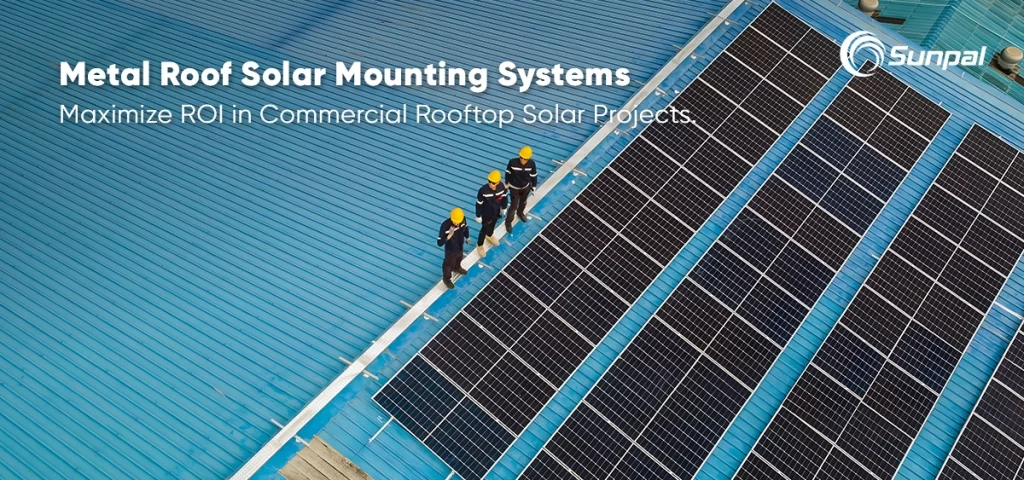
Why Do Most EPCs Underestimate the Mounting System?
When businesses evaluate a commercial rooftop solar system, attention usually goes to high-efficiency modules, string inverters, or battery storage integration. Yet one component quietly determines structural safety, installation speed, O&M costs, and long-term ROI: the solar PV mounting system for metal roofs.
With global C&I solar deployment accelerating, metal-roofed factories, warehouses, and logistics centers have become prime assets for industrial rooftop solar installation. However, many project developers still apply conventional racking logic to metal structures—overlooking optimized standing seam solar mounting systems designed specifically for steel roofing.
For solar companies targeting high-performance, low-risk projects, the mounting strategy is no longer secondary. It is foundational.
Global Shift Toward Metal Roof Solar Deployment
Industrial buildings worldwide increasingly adopt metal roofing due to durability, lightweight structure, and cost efficiency. As distributed generation expands, these rooftops represent one of the fastest-growing segments in the solar EPC market.
Chart 1: Growth of Global Commercial Rooftop Solar (2020–2025)
| Year | Global C&I Rooftop Installations (GW) | % Installed on Metal Roofs |
| 2020 | 32 GW | 54% |
| 2021 | 39 GW | 57% |
| 2022 | 46 GW | 60% |
| 2023 | 55 GW | 63% |
| 2024 | 63 GW | 66% |
| 2025* | 72 GW (Projected) | 69% |
*Industry projections based on global distributed solar trends.
The data indicates two important realities:
- Commercial rooftop solar capacity continues double-digit growth.
- Metal roofs dominate new industrial PV installations.
This trend directly increases demand for non-penetrating solar mounting systems optimized for metal roof structures.
Technical Realities of Metal Roof Solar Installation
Installing photovoltaic systems on metal roofs is not merely a simplified rooftop job. It presents unique structural and environmental variables:
1. Wind Uplift & Structural Stress
Industrial buildings often sit in open areas exposed to high wind speeds. Improper wind load calculation for solar roof systems can lead to panel displacement or roof deformation.
2. Thermal Expansion of Steel Sheets
Metal roofing expands and contracts significantly with temperature changes. Rigid mounting systems without flexibility may cause long-term fatigue or seal damage.
3. Waterproof Integrity
Traditional penetrating racking systems increase leakage risk, particularly in aging industrial roofs.
4. Load Distribution Limits
While metal roofs are lightweight, their load-bearing capacity must be assessed precisely to avoid structural reinforcement costs.
These challenges demand specialized aluminum solar mounting structures engineered for steel roofing compatibility.
Why Standing Seam Clamp Systems Outperform Traditional Racking
Many solar businesses still default to drilling-based mounting methods. However, modern clamp-based solar mounting systems for standing seam roofs offer superior performance in multiple dimensions.
Non-Penetrating Installation Design
Standing seam clamps attach directly to raised seams without roof penetration. This eliminates:
- Waterproofing risk
- Sealant maintenance
- Long-term leakage liability
For facility owners, this significantly reduces O&M concerns.
Lightweight Aluminum Alloy Construction
High-grade anodized aluminum structures provide:
- Lower dead load on rooftops
- Corrosion resistance in coastal zones
- Reduced structural reinforcement costs
For retrofit solar projects, weight reduction directly influences feasibility.
Faster EPC Installation Timeline
Non-penetrating clamp systems simplify layout and reduce drilling labor. This leads to:
- Shorter installation cycles
- Lower labor costs
- Faster grid connection
For large industrial rooftops, even a 10–15% time reduction improves project cash flow.
Engineered Wind Resistance
Professional mounting systems incorporate:
- Aerodynamic profile optimization
- Distributed load design
- Certified wind tunnel testing
For regions exposed to typhoons or high wind speeds, wind-resistant solar mounting structures are not optional—they are essential.
Lifecycle Cost Comparison: Standard vs Optimized Metal Roof Mounting
Chart 2: 20-Year Cost Impact Comparison (Per MW Project)
| Cost Factor | Standard Penetrating System | Engineered Clamp System |
| Initial Installation | $82,000 | $78,000 |
| Waterproof Maintenance (20 yrs) | $18,000 | $4,000 |
| Structural Reinforcement | $12,000 | $3,000 |
| Wind Damage Risk Reserve | $10,000 | $2,000 |
| Total 20-Year Cost | $122,000 | $87,000 |
The data reveals a potential 28–30% lifecycle cost reduction when using optimized metal roof solar mounting systems.
For project investors evaluating IRR and payback periods, mounting design materially impacts long-term profitability.
ROI Perspective: Mounting Systems Influence Bankability
In large-scale commercial rooftop solar projects, financial institutions increasingly assess structural and waterproof risk before approving financing.
A properly engineered industrial metal roof PV installation system improves:
- Insurance acceptance
- Asset durability
- O&M predictability
- Long-term energy yield stability
Chart 3: Estimated Payback Period Impact (5 MW C&I Rooftop Project)
| Mounting Type | Estimated Payback Period |
| Conventional Penetration System | 6.8 years |
| Optimized Clamp-Based System | 6.1 years |
While module efficiency attracts attention, structural optimization quietly accelerates financial returns.
Application Scenarios Driving Market Demand
Specialized solar mounting systems for metal roofs are particularly valuable in:
- Manufacturing plants
- Logistics warehouses
- Agricultural metal sheds
- Cold storage facilities
- High-wind coastal industrial zones
As distributed solar + battery storage integration expands, rooftop structural stability becomes even more critical due to increased system complexity.
The Future of Commercial Rooftop Solar Mounting
Emerging trends shaping the next phase of rooftop PV development include:
- Integration with BESS for peak shaving
- Smart structural monitoring
- Corrosion-resistant alloys for coastal regions
- AI-assisted structural load analysis
- Modular mounting components for rapid EPC deployment
As rooftop solar systems evolve toward hybrid energy solutions, mounting infrastructure must match performance expectations.
Strategic Insight from Sunpal
In global C&I solar markets, mounting systems are no longer auxiliary hardware—they are strategic infrastructure.
As a professional solar solution provider, Sunpal focuses on customized solar PV mounting systems for metal roofs, integrating:
- Project-specific wind and snow load assessment
- Non-penetrating standing seam clamp technology
- Lightweight aluminum structural design
- Compliance with international engineering standards
By combining system-level engineering with rooftop structural optimization, Sunpal supports EPC contractors, distributors, and industrial clients seeking safe, bankable, and cost-efficient solar projects.
Conclusion: The Mounting System Is the Hidden Performance Multiplier
In commercial rooftop solar, modules generate electricity—but mounting systems protect investment.
For businesses planning industrial rooftop solar installation, selecting the right solar PV mounting system for metal roofs directly impacts:
- Installation efficiency
- Structural durability
- Waterproof reliability
- Long-term O&M cost
- Project bankability
In a market increasingly focused on lifecycle performance and financial returns, optimized metal roof mounting solutions are not an accessory—they are a decisive competitive factor.If you are evaluating a commercial or industrial rooftop solar project, consult Sunpal's engineering team for a customized structural assessment and optimized metal roof mounting solution tailored to your project conditions.