Введение
Why are battery energy storage system (BESS) prices rising again just as global renewable energy deployment reaches record highs?
The global energy storage industry is entering one of the most important transition periods in its history. Over the past several years, battery energy storage systems have evolved from a niche technology into a foundational component of modern energy infrastructure. Across residential, commercial, industrial, and utility-scale applications, BESS solutions are now supporting renewable integration, grid stabilization, energy resilience, and electricity cost optimization.
At the same time, the market is experiencing a new cycle of short-term pricing pressure.
Fluctuating lithium prices, supply chain restructuring, increasing demand from AI data centers, and large-scale global manufacturing shifts are pushing battery procurement costs upward in several regions. Developers, EPC companies, distributors, and commercial investors are facing growing uncertainty regarding project costs and long-term profitability.
However, industry experts widely agree that the long-term direction of energy storage economics remains unchanged.
Technological innovation continues to drive lower lifecycle costs, higher system efficiency, improved safety, and stronger operational reliability. The rapid adoption of lithium iron phosphate (LFP) batteries, improvements in system integration, gigafactory expansion, and advanced manufacturing automation are all reshaping the economics of energy storage projects worldwide.
The current market cycle is not slowing the global storage transition. Instead, it is accelerating innovation.
For commercial buyers, investors, EPC companies, and renewable energy developers, understanding the difference between temporary market volatility and long-term technology trends has become increasingly important.Companies that focus only on upfront procurement pricing may overlook the broader economics shaping the future of energy storage investment.

Image 1: Utility-scale BESS containers integrated with solar and grid infrastructure.
The Global Energy Storage Boom Is Accelerating
Global electricity systems are changing rapidly.
The increasing adoption of solar and wind energy is creating unprecedented demand for flexible energy infrastructure capable of balancing intermittent renewable generation. Governments worldwide are accelerating investments in clean energy transition strategies, while utilities are modernizing aging grid systems to improve reliability and resilience.
Battery energy storage systems are becoming a central solution for addressing these challenges.
Unlike traditional fossil-fuel-based power systems, renewable energy generation fluctuates depending on weather conditions and electricity demand patterns. Energy storage helps stabilize power supply, improve dispatchability, reduce curtailment, and support peak-load management.
The rapid growth of electric vehicles, electrified industrial processes, and AI-driven digital infrastructure is also increasing pressure on electricity grids worldwide.As a result, global BESS deployment is expected to continue expanding significantly throughout the next decade.
Global BESS Installed Capacity Growth (2020–2030)
| Год | Global BESS Capacity (GWh) |
|---|---|
| 2020 | 25 |
| 2022 | 58 |
| 2024 | 130 |
| 2026 | 260 |
| 2028 | 470 |
| 2030 | 720 |
How Battery Energy Storage Systems Work?
The Contradiction Between Short-Term Price Pressure and Long-Term Cost Decline
At first glance, the current energy storage market appears contradictory.
The industry has long promoted falling battery costs and improving project economics as key drivers for global storage adoption. Yet in 2026, many developers and commercial buyers are once again confronting pricing uncertainty.
The reality is more nuanced.
Short-term price increases are primarily driven by supply chain adjustments, raw material volatility, manufacturing transitions, and rapidly growing electricity demand. However, long-term technological trends continue moving toward lower lifecycle costs and improved system economics.
This distinction is extremely important.
Temporary procurement price increases do not necessarily mean energy storage projects are becoming less profitable. In many cases, improvements in battery lifespan, safety, system integration, and operational efficiency continue reducing the total cost of ownership (TCO) over time.
For experienced investors and EPC companies, the focus is increasingly shifting away from short-term pricing and toward long-term operational value.
The Two Sides of the BESS Market
Short-Term Price Drivers
- Lithium price volatility
- Supply chain restructuring
- Global trade policies
- AI data center demand
- Manufacturing transition costs
Long-Term Cost Reduction Drivers
- LFP adoption
- Manufacturing automation
- Gigafactory expansion
- System integration
- Smart energy management software
- Higher cycle life batteries
Why Are BESS Prices Increasing in 2026?
Lithium and Raw Material Volatility
One of the primary reasons behind current BESS price increases is continued volatility in global battery raw material markets.
Although lithium carbonate prices declined significantly after the extreme spikes of 2022 and 2023, the market remains highly sensitive to supply-demand imbalances. Rapid growth in electric vehicles, utility-scale storage, and renewable infrastructure continues placing pressure on lithium supply chains.
In addition to lithium, several key battery materials — including nickel, copper, graphite, aluminum, and manganese — have also experienced fluctuations due to geopolitical uncertainty, transportation costs, mining investment delays, and environmental regulations.
Battery manufacturers are simultaneously facing:
- Higher refining costs
- Increasing labor expenses
- Regional manufacturing localization
- Shipping and logistics uncertainty
- Currency fluctuations
- Stricter environmental compliance requirements
These factors collectively influence battery cell pricing, inverter costs, power conversion systems, and integrated BESS manufacturing expenses.
While raw material markets are expected to stabilize over time, short-term fluctuations continue affecting procurement planning for EPC contractors and project developers worldwide.

Image 2: Lithium mining, battery refining, or industrial material production.
Battery Material Price Trend (2022–2026)
| Материал | 2022 | 2023 | 2024 | 2025 | 2026 |
|---|---|---|---|---|---|
| Lithium Carbonate | Высокий | Очень высокий | Умеренный | Stable | Умеренный |
| Nickel | Высокий | Высокий | Умеренный | Умеренный | Умеренный |
| Медь | Умеренный | Высокий | Высокий | Умеренный | Умеренный |
| LFP Cell Pricing | Высокий | Умеренный | Lower | Lower | Stable |
AI Data Centers and Global Electricity Demand
Artificial intelligence infrastructure is creating an entirely new layer of global electricity demand.
Modern AI data centers require stable, high-quality power supplies capable of supporting extremely energy-intensive computing operations. Battery storage systems are increasingly becoming strategic infrastructure for backup power, demand response, peak shaving, and grid support within hyperscale digital facilities.
Industry analysts expect AI-driven electricity demand to become one of the largest long-term drivers of commercial and utility-scale energy storage deployment.
As governments and utilities expand digital infrastructure, battery storage will play a critical role in ensuring power reliability and grid flexibility.
Estimated Electricity Consumption of AI Infrastructure
| Год | AI Data Center Electricity Demand | Annual Growth Rate | Key Industry Driver |
|---|---|---|---|
| 2022 | 390 TWh | - | Cloud Computing Expansion |
| 2023 | 460 TWh | 17.9% | AI Training Infrastructure Growth |
| 2024 | 540 TWh | 17.4% | Hyperscale Data Center Expansion |
| 2025 | 620 TWh | 14.8% | AI Inference Demand Surge |
| 2026 | 730 TWh | 17.7% | Large Language Model Deployment |
| 2027 | 850 TWh | 16.4% | AI-Driven Industrial Automation |
| 2028 | 980 TWh | 15.3% | Global AI Infrastructure Scaling |
| 2029 | 1120 TWh | 14.2% | AI Edge Computing Expansion |
| 2030 | 1280 TWh | 14.3% | Fully Integrated AI Ecosystems |
The Real Metric Investors Should Watch — Total Cost of Ownership (TCO)
One of the biggest mistakes in energy storage procurement is focusing exclusively on upfront purchase price.
The true economic value of a battery system is determined by total cost of ownership (TCO), which includes:
- Initial equipment cost
- Installation expenses
- Требования к техническому обслуживанию
- Efficiency losses
- Battery degradation
- Replacement frequency
- Operational lifespan
- Warranty coverage
- Downtime risk
A lower-cost battery with shorter lifespan and higher degradation may ultimately cost substantially more over a 10-year project lifecycle.
For example, a system requiring replacement after six years could significantly increase operational expenses compared with a higher-quality system capable of operating reliably for 15 years or more.
This is one reason why commercial and utility-scale buyers increasingly prioritize:
- Срок службы цикла
- Bankable suppliers
- Long-term warranties
- Safety certifications
- System integration capability
- Proven field performance
As the BESS market matures, investment decisions are shifting from short-term procurement thinking toward long-term asset management strategies.
Cheap Battery vs Smart Investment
Comparison Areas
- Replacement frequency
- Warranty coverage
- Downtime risk
- Efficiency degradation
- Maintenance costs
- Long-term profitability
10-Year Lifecycle Cost Comparison
| Cost Category | Low-Cost Battery | High-Quality LFP Battery |
|---|---|---|
| Initial Cost | Lower | Higher |
| Техническое обслуживание | Higher | Lower |
| Replacement | Требуется | Minimal |
| Energy Loss | Higher | Lower |
| 10-Year TCO | Higher | Lower |
Energy Storage ROI Calculator
User Inputs
- Electricity price
- Battery size
- Daily usage
- Солнечная генерация
- Demand charge
- Operating hours
Outputs
- ROI period
- Lifetime savings
- Payback period
- Carbon reduction
- Estimated annual savings
Energy Storage ROI Calculator
How Energy Storage Is Reshaping Global Energy Infrastructure
Energy storage is no longer simply a supporting technology for renewable energy systems.
It is becoming foundational infrastructure for the future electricity ecosystem.
Solar Plus Storage Is Becoming the New Standard
Across many global markets, solar projects increasingly include integrated battery storage from the beginning of project development.
This trend is particularly strong in regions facing:
- High electricity costs
- Нестабильность сети
- Renewable curtailment
- Peak demand challenges
- Weak transmission infrastructure
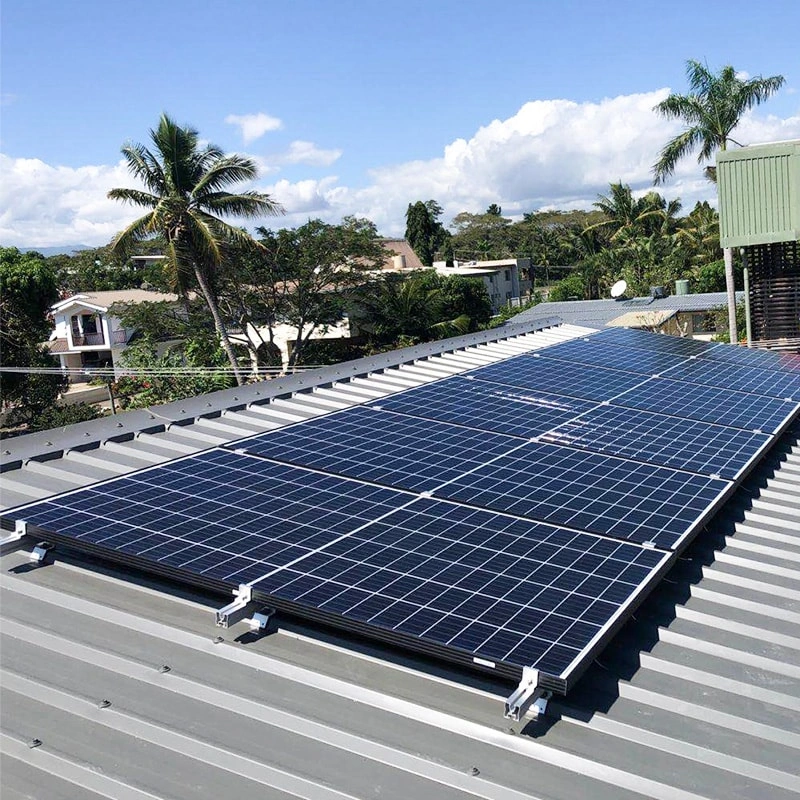
Battery storage enables solar energy to become dispatchable, improving grid reliability and enhancing project profitability.

Image 3: Commercial rooftop solar integrated with battery storage.
Virtual Power Plants and Smart Grid Development
Battery systems are also enabling the development of virtual power plants (VPPs), where distributed storage assets collectively support grid stability.
Advanced energy management software allows storage systems to respond dynamically to electricity pricing, grid frequency, and energy demand.
These technologies are transforming passive electricity consumers into active energy participants.
Smart Grid Ecosystem Diagram
Include
- Distributed batteries
- EV charging stations
- Smart buildings
- AI optimization
- Renewable generation
- Grid dispatch systems
Microgrids and Energy Independence
Microgrid adoption is expanding rapidly across industrial facilities, hospitals, remote communities, data centers, and critical infrastructure sectors.
Battery storage plays a central role in enabling resilient localized power systems capable of operating independently from traditional utility grids.
As climate-related power disruptions increase globally, energy resilience is becoming an increasingly important investment priority.

Image 4: Remote industrial microgrid powered by solar and storage.
What Should EPC Companies and Buyers Do During This Market Cycle?
Current market conditions require strategic procurement planning rather than reactive decision-making.
Developers, EPC companies, and commercial buyers should focus on several key priorities.
Focus on Long-Term ROI Instead of Short-Term Pricing
Avoid evaluating projects based solely on initial system pricing.
Lifecycle economics matter far more than temporary market fluctuations.
Evaluate Supplier Bankability
Choose manufacturers with proven production capability, strong certifications, technical support, and global project experience.
Prioritize Safety and Cycle Life
Long operational lifespan and stable battery chemistry can significantly improve long-term financial performance.
Consider Integration Capability
Highly integrated systems often reduce installation complexity, maintenance costs, and operational risk.
Monitor Policy and Incentive Trends
Government incentives, localization policies, and energy regulations continue influencing project economics worldwide.
Companies that remain flexible and informed will be better positioned to navigate evolving market conditions.
Energy Storage Procurement Decision Framework
Evaluation Categories
- Срок службы цикла
- Гарантия
- Supplier bankability
- Сертификаты
- Integration capability
- Technical support
- Global project references
Future Outlook — What Will the Global BESS Industry Look Like by 2030?
The global energy storage market is expected to expand dramatically over the next decade.
Several trends are likely to define the industry’s future direction:
- Continued dominance of LFP technology
- Higher system integration
- AI-driven energy optimization
- Smart grid expansion
- Growth of virtual power plants
- Increased adoption of sodium-ion batteries
- Large-scale microgrid deployment
As electricity systems become more decentralized and renewable-heavy, energy storage will play an increasingly critical role in maintaining grid stability and supporting energy security.
Global Energy Storage Market Forecast (2025–2035)
Future Energy Storage Technologies Reshaping the Global Power Industry
As the global energy transition accelerates, next-generation battery technologies and intelligent energy management systems are rapidly transforming the future of renewable energy infrastructure. Emerging innovations are expected to significantly improve energy storage efficiency, reduce operational costs, enhance grid stability, and accelerate worldwide decarbonization efforts.
Sodium-Ion Battery Systems
Sodium-ion battery technology is emerging as one of the most promising alternatives to traditional lithium-ion batteries. Unlike lithium-based chemistries, sodium-ion batteries rely on widely available raw materials, helping reduce supply chain risks and material cost volatility.
Key advantages include:
- Lower raw material costs
- Improved supply chain sustainability
- Better low-temperature performance
- Reduced dependence on lithium and cobalt
- Strong potential for large-scale stationary storage
Industry analysts expect sodium-ion systems to become increasingly competitive in utility-scale and grid-level energy storage projects over the next decade.
Solid-State Battery Technology
Solid-state batteries are considered one of the most important long-term breakthroughs in battery technology. By replacing liquid electrolytes with solid materials, these systems offer major improvements in safety, energy density, and charging performance.
Potential benefits include:
- Higher energy density
- Faster charging capability
- Improved thermal stability
- Lower fire risk
- Longer operational lifespan
Although commercialization remains in early stages, major global manufacturers and research institutions are investing heavily in solid-state battery development for both electric vehicles and advanced energy storage systems.
AI-Managed Smart Grid Systems
Artificial intelligence is becoming increasingly important in modern power grid management. AI-powered energy platforms can analyze electricity demand patterns, predict renewable generation output, optimize battery dispatch, and improve overall grid efficiency in real time.
Modern AI-managed smart grids can provide:
- Automated energy balancing
- Predictive maintenance
- Real-time load optimization
- Peak shaving and demand response
- Improved renewable integration
- Enhanced grid resilience
As renewable penetration increases worldwide, AI-driven energy management systems are expected to become critical infrastructure for future power networks.
Fully Integrated Renewable Energy Ecosystems
The future energy landscape is shifting toward highly integrated renewable energy ecosystems that combine solar generation, battery storage, EV charging, smart energy management, and distributed grid technologies into unified platforms.
Integrated clean energy ecosystems typically include:
- Solar PV systems
- Commercial and utility-scale battery storage
- EV charging infrastructure
- AI-based energy management software
- Virtual power plants (VPP)
- Smart grid connectivity
- Distributed energy resources (DER)
These fully integrated systems improve energy independence, reduce operational costs, enhance grid flexibility, and support long-term carbon neutrality goals.
Заключение
The global BESS industry is entering a new phase of maturity.
Short-term pricing pressure may continue as raw material markets fluctuate, supply chains evolve, and global demand accelerates. However, these temporary challenges do not change the broader trajectory of the energy storage sector.
The long-term direction remains clear.
Battery systems are becoming safer, more intelligent, more integrated, and more economical. Advances in LFP technology, manufacturing automation, thermal management, and next-generation battery chemistry are steadily improving lifecycle economics across residential, commercial, and utility-scale applications.
At the same time, global electrification, renewable energy expansion, AI infrastructure growth, and grid modernization are creating unprecedented demand for reliable energy storage solutions.
For investors and project developers, the most important lesson is that long-term value matters more than short-term price volatility.
The companies best positioned for the future will not simply chase the lowest procurement cost. They will focus on system reliability, operational efficiency, lifecycle performance, and strategic energy resilience.
Energy storage is no longer just supporting renewable energy.
It is becoming one of the defining infrastructures of the global energy transition.

Image 5: Smart city powered by solar, wind, and battery energy storage systems.