


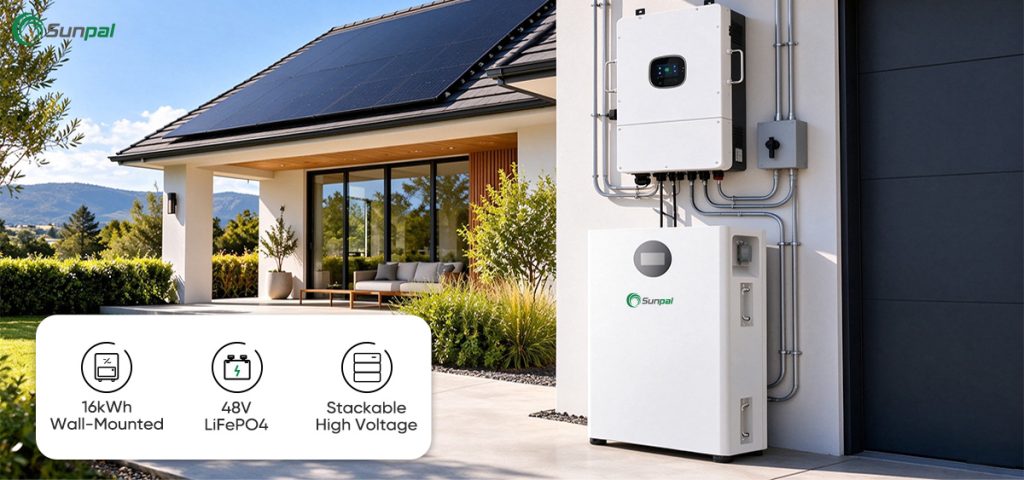
Residential energy storage is no longer just about keeping a few lights on during a power outage. As more households install solar panels, manage time-of-use electricity rates, and look for greater energy independence, battery capacity and system architecture have become important purchasing decisions.
Among the available options, lithium iron phosphate (LiFePO4 or LFP) batteries have become a widely used choice for residential energy storage. However, selecting a battery involves more than comparing its rated capacity. A 16kWh wall-mounted battery, a 48V low-voltage system, and a stackable high-voltage battery serve different installation requirements and energy demands.
Understanding these distinctions is key to designing a reliable residential energy storage system.
Why Residential Lithium Battery Storage Is the Backbone of Modern Home Energy
Residential battery storage allows households to store electricity generated by solar panels or supplied by the grid and use it when needed. This makes it possible to shift solar energy consumption into the evening, reduce dependence on grid electricity, and maintain selected household loads during power interruptions.
The Rise of Lithium-Based Residential ESS
Lead-acid batteries have traditionally been used in residential backup and off-grid systems, but lithium iron phosphate (LiFePO4 or LFP) batteries are becoming a preferred option for many modern residential ESS applications.
This transition is largely driven by three household energy needs:
Greater Energy Independence: Homeowners can store electricity generated by solar panels or charge batteries from the grid when appropriate, reducing reliance on utility electricity during peak-demand periods.
Higher Solar Self-Consumption: Instead of sending all surplus daytime solar generation back to the grid, a home battery stores excess energy for evening and nighttime use.
Reliable Backup Power: During grid interruptions, a properly configured residential ESS can supply essential household appliances, such as lighting, refrigerators, and communication equipment.
Battery storage also requires appropriate system integration. According to the U.S. Department of Energy's Solar Energy Guide for Homebuilders, homeowners should consider utility requirements, local building codes, and applicable fire and electrical regulations when planning battery installations.
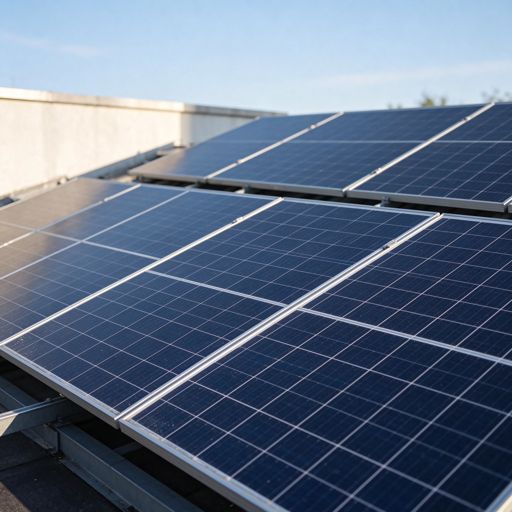
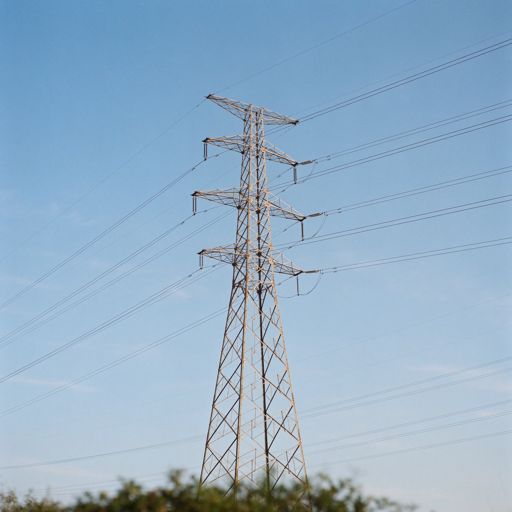
Residential Solar Battery Energy Flow
How rooftop solar, grid, home battery and backup loads work together


Sunpal's Residential Battery Portfolio at a Glance
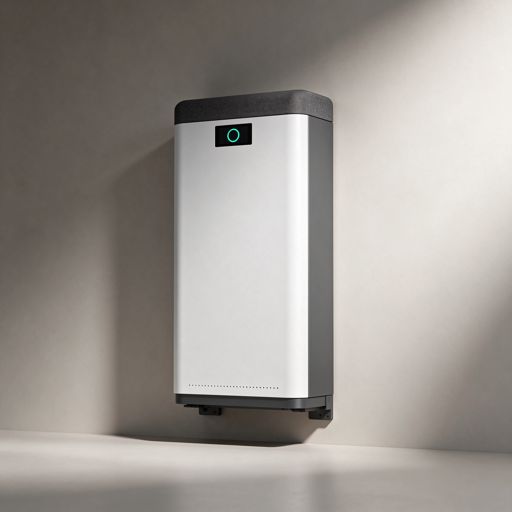
Different households require different battery capacities and system architectures. Some prioritize compact installation and larger storage capacity, while others need a flexible 48V system or an expandable high-voltage configuration.
Sunpal offers three main residential battery solutions to address these requirements:
| Battery Series | Capacity & Voltage | Primary Application | Main Selling Point |
|---|---|---|---|
| 16kWh Wall-Mounted | 16kWh, 51.2V | Residential solar storage and backup | Integrated wall-mounted design |
| 48V 10kWh LiFePO4 | 10kWh, 51.2V | Off-grid and hybrid systems | Low-voltage system flexibility |
| Stackable HV Battery | 10–24kWh, high-voltage | Larger residential storage systems | Modular expansion |
16kWh Wall-Mounted Lithium Battery: The Sweet Spot for Whole-Home Backup
A 16kWh lithium battery offers a practical storage capacity for households that need more than basic emergency backup. It can support essential household loads, provide additional evening energy, and work alongside a residential solar system.
However, whether 16kWh is sufficient depends on daily electricity consumption, the loads being backed up, and the battery's usable capacity.
Capacity and Sizing: How Many kWh Do You Need?
A household consuming 10–15kWh of electricity per day may find a 16kWh battery suitable for covering a substantial portion of its daily energy requirements.
The actual available energy is lower than the rated capacity because battery systems operate within specified depth-of-discharge limits.
For example, a 16kWh battery operating at a 90% usable depth of discharge provides approximately:
16kWh × 90% = 14.4kWh of usable energy.
This is an illustrative calculation rather than a guaranteed specification. Actual usable capacity depends on the battery manufacturer's operating limits, temperature, inverter settings, and battery condition.
It is also important to distinguish between energy capacity and power output:
- Capacity (kWh): Determines how much energy the battery stores.
- Power (kW): Determines how much electricity it can deliver at a given moment.
- Surge power: Determines whether it can handle temporary high-demand loads, such as motor starting.
For example, a battery may have sufficient stored energy to operate a refrigerator, lighting, and communication equipment for several hours, but its continuous output and surge rating must also support those loads simultaneously.
For projects requiring a larger residential storage bank, the 16kWh wall-mounted lithium battery pack is one configuration worth evaluating.
Installation and Space-Saving Design
Wall-mounted battery systems offer a relatively compact installation option compared with assembling multiple separate battery modules.
Before installation, buyers and installers should check:
- Available wall space and structural load capacity.
- Battery weight and mounting requirements.
- Clearance for ventilation, inspection, and maintenance.
- Operating temperature and environmental conditions.
- Cable routing and DC protection requirements.
- Compatibility with the selected hybrid inverter.
A wall-mounted design can simplify the physical arrangement of a residential ESS, but installation must still follow the manufacturer's instructions and local electrical requirements.
48V 10kWh LiFePO4 Battery: The Workhorse for Off-Grid and Hybrid Systems
A 48V 10kWh LiFePO4 battery is another common configuration for residential solar storage, particularly in off-grid and hybrid applications.
Unlike a higher-voltage battery architecture, a low-voltage system operates around a nominal voltage of 48V or 51.2V, depending on its cell configuration.
Why 48V LiFePO4 Is a Popular Choice for Residential ESS
One reason for the popularity of 48V batteries is their compatibility with a broad range of low-voltage solar inverters.
A typical 51.2V LiFePO4 battery uses 16 cells connected in series, with each cell having a nominal voltage of 3.2V.
The resulting nominal voltage is:
16 × 3.2V = 51.2V.
This architecture is commonly used in residential and off-grid battery systems.
Other advantages include:
- Flexible system configuration: Multiple compatible battery units may be connected in parallel to increase storage capacity.
- Established inverter options: Many hybrid and off-grid inverter manufacturers offer compatible 48V battery models.
- Straightforward system expansion: Additional battery capacity can be introduced when supported by the battery and inverter manufacturers.
- Practical maintenance: Low-voltage systems are familiar to many residential solar installers.
However, a 48V battery requires relatively high DC current when supplying substantial power. Cable cross-sections, connectors, fuses, and circuit breakers must therefore be selected according to the system's actual current requirements.
Wholesale and OEM Options for Installers
For solar distributors and installers, battery selection also involves supplier consistency, inverter communication, and long-term product availability.
When evaluating a 48V 10kWh LiFePO4 battery for solar systems, buyers should check the following:
- Cycle-life conditions: Confirm the rated cycle life, depth of discharge, temperature, and end-of-life capacity used in the manufacturer's testing.
- BMS communication: Verify CAN or RS485 communication and the supported inverter protocol.
- Parallel connection limits: Check the maximum number of batteries permitted in one system.
- Protection functions: Review overvoltage, undervoltage, overcurrent, and temperature protection.
- Supply arrangements: Confirm product availability, warranty terms, technical documentation, and OEM customization options.
A specification such as 6,000 cycles should always be evaluated against its stated test conditions rather than treated as a universal lifespan guarantee.
Stackable HV Lithium Battery (10kWh–24kWh): Scalable Storage for Growing Energy Needs
For households with higher electricity consumption, larger backup requirements, or plans to expand their solar installations, stackable high-voltage battery systems offer another approach.
Instead of relying on multiple low-voltage battery units connected in parallel, an HV battery architecture combines compatible modules to create a higher-voltage battery bank.
HV vs. LV: Which Architecture Fits Your Project?
The most important difference between low-voltage and high-voltage systems is their DC operating voltage and the way the battery communicates with the inverter.
For the same power output, increasing DC voltage reduces the current required. This can help reduce resistive cable losses and simplify some high-power system designs.
However, higher voltage also introduces additional electrical safety considerations. Installation, commissioning, and maintenance must be performed according to the manufacturer's procedures and applicable regulations.
Stacking for Expandability: From 10kWh to 24kWh and Beyond
A modular battery design allows storage capacity to be configured according to the requirements of a particular project.
For example, a household may initially install a 10kWh storage system and later expand it toward 20kWh or 24kWh, provided the battery platform supports the proposed configuration.
Before expansion, installers should verify:
- The maximum number of supported battery modules.
- Compatibility between existing and additional modules.
- Permitted module combinations and installation sequences.
- Battery management system configuration.
- Inverter voltage and power operating ranges.
- State-of-charge matching and commissioning requirements.
It is important not to assume that every stackable battery supports unrestricted expansion. The manufacturer's approved module combinations and connection procedures should always take priority.
Maximizing Battery Performance: Capacity, Safety, and Monitoring
Battery capacity on a datasheet does not always translate into the same amount of electricity available to household appliances.
The difference between rated capacity and actual delivered energy depends on several system-level factors.
Understanding Usable Capacity vs. Rated Capacity
A battery's rated energy capacity represents its nominal stored energy under specified test conditions. The usable energy available to a household depends on the permitted depth of discharge and the losses throughout the energy conversion process.
For example, a nominal 16kWh battery operating with a 90% usable depth of discharge provides approximately 14.4kWh before accounting for other system losses.
Several factors can reduce the energy available at the AC loads:
- Depth of discharge: The battery management system may reserve a portion of capacity to protect battery operation.
- Inverter efficiency: Converting DC battery energy into AC electricity introduces conversion losses.
- Temperature: Operating outside the recommended temperature range can affect battery performance.
- Battery aging: Available capacity gradually changes with use and time.
- Power demand: High discharge rates may affect the energy available under certain battery operating conditions.
This also helps explain why some solar battery systems appear to deliver only 70% of their rated capacity in particular operating scenarios.
However, 70% is not a universal performance ratio or an automatic indication of battery failure. The actual result depends on the measurement point, discharge settings, inverter losses, operating conditions, and battery condition.
When reviewing a battery performance report, buyers should distinguish between rated battery capacity, usable DC energy, and electricity delivered to household AC loads.
Safety Certifications and Installation Best Practices
Battery safety depends on more than the chemistry itself. Cell quality, battery management, enclosure design, electrical protection, and installation conditions all contribute to overall system safety.
A properly designed residential battery system should include:
- Battery management system (BMS) monitoring.
- Overvoltage and undervoltage protection.
- Overcurrent and short-circuit protection.
- Temperature monitoring and operating limits.
- Appropriate DC isolation and circuit protection.
- Suitable installation clearances and environmental conditions.
Buyers should also review the certifications and test reports applicable to the complete battery product and intended market. Relevant standards may include IEC 62619 and UL 1973, depending on the product and jurisdiction.
For indoor or outdoor installations, local fire codes, building regulations, and utility interconnection requirements must also be considered.
Battery monitoring is another important part of long-term operation. Depending on the product, an app or monitoring platform may provide information such as state of charge, voltage, current, temperature, and operating alarms.
Choosing the Right Residential Battery for Your Market
Residential Battery Architecture
Start from the household's real energy demand, then match the battery architecture to climate, grid reliability and budget.
Whole-home backup
Off-grid & hybrid
Scalable storage
Climate & Installation Environment
Check charging and discharging temperature ranges, ventilation clearances and enclosure rating. In hot or coastal regions, derating and corrosion protection matter more than the datasheet capacity.
Grid Reliability
Frequent outages push sizing toward longer backup hours and higher surge headroom. A stable grid with time-of-use tariffs favours capacity tuned to evening peak shifting instead.
Budget & Total Cost of Ownership
Compare usable energy, continuous power, cycle life under stated test conditions, warranty and installation cost — not the headline price per kWh alone.
Specifications are indicative for comparison; confirm final values against the current product datasheet.
| Comparison Item | 16kWh Wall-Mounted | 48V 10kWh LiFePO4 | Stackable HV (10–24kWh) |
|---|---|---|---|
| Rated energy capacity | 16 kWh | 10 kWh | 10 kWh – 24 kWh (modular) |
| Nominal voltage | 51.2 V (48V class) | 51.2 V (16 × 3.2 V cells) | Higher-voltage modular bank, per module configuration |
| Chemistry | LiFePO4 | LiFePO4 | LiFePO4 |
| Connection architecture | Single wall unit, parallel expansion | Parallel battery units | Series / manufacturer-specific modular stack |
| Compatibilidad con inversores | Compatible low-voltage hybrid inverter | Widest choice of 48V hybrid & off-grid inverters | Requires compatible high-voltage hybrid inverter |
| Installation form | Wall-mounted, space-saving | Floor or rack cabinet | Vertical stack, dedicated storage area |
| DC current at equal power | Más alto | Más alto | Lower (smaller conductors for equivalent power) |
| Expansion path | Add compatible parallel units | Add parallel batteries within BMS limits | Add battery modules up to platform maximum |
| Aplicación típica | Whole-home & essential-load backup | Off-grid and residential hybrid systems | Higher-demand homes and larger storage banks |
| Best fit when | Utility-tied home with evening shifting and outage cover | Installer standardises on 48V hybrid platforms | Load grows in stages or backup hours exceed 8–10 h |
| Relative cost position | Mid — single-unit simplicity | Lowest entry per kWh | Higher per kWh, better cost per kWh at scale |
Evaluating a storage supplier, not just a battery
- Cell-to-pack production with consistent BMS firmware
- IEC 62619 / UL 1973 aligned testing and reports
- Inverter protocol matching support (CAN / RS485)
- OEM branding, enclosure and capacity customisation
- Wholesale MOQ, packaging and container loading plans
- Warranty terms, spare parts and technical documentation
There is no single battery capacity or voltage architecture that works best for every home. The right configuration depends on how the system will operate, how loads are managed, and whether the installation can support the selected battery over its expected service life.
Climate and Load Considerations
Once the battery architecture has been selected, the next step is to confirm how it will perform under actual operating conditions.
Load Distribution and Power Management
Not every household appliance needs to remain powered during an outage. Separating essential loads from non-essential circuits can help control battery demand and avoid unnecessary system oversizing.
For example, refrigerators, lighting, communication equipment and selected outlets may be connected to the backup circuit, while high-consumption appliances operate only when grid power is available.
In addition to total energy consumption, installers should check whether the inverter can handle simultaneous loads and the starting current of equipment such as air conditioners and water pumps.
Installation Environment
Battery placement also affects system reliability. High ambient temperatures may require additional ventilation or thermal management, while cold environments can restrict charging performance.
Humidity, dust exposure and coastal conditions should also be considered when selecting the enclosure and installation location. Buyers should confirm the manufacturer's environmental specifications and installation clearances rather than assuming all residential batteries suit outdoor or exposed locations.
Total Cost of Ownership Analysis
The initial battery price is only one part of the overall investment. A more meaningful comparison considers how much usable energy the system delivers, how long it can operate under expected conditions, and what additional costs may arise during its service life.
| Factor de evaluación | What Buyers Should Check |
|---|---|
| Initial system cost | Battery, inverter, accessories and protection devices |
| Usable energy | Available capacity within permitted operating limits |
| Power output | Continuous and peak discharge ratings |
| Operating efficiency | Charge and discharge efficiency under specified conditions |
| Ciclo de vida | Test conditions and end-of-life capacity |
| Garantía | Coverage period, energy throughput and exclusions |
| Installation and maintenance | Labor, mounting, electrical work and servicing |
| Proyección de expansión futura | Additional battery costs and system compatibility |
For example, a lower-priced 48V battery may suit a household using an established low-voltage inverter platform. A modular high-voltage system may involve a higher initial investment but offer a more practical expansion path when storage demand increases.
The most cost-effective option is therefore not necessarily the battery with the lowest price per kWh. It is the configuration that meets the household's requirements without unnecessary capacity, inverter upgrades or avoidable installation expenses.
Evaluating a Residential Battery Supplier
For distributors, installers and project developers, battery selection also involves evaluating the supplier's ability to support consistent product quality and long-term business requirements.
Key points include:
- Manufacturing consistency: Stable cell sourcing, production controls and BMS firmware management.
- Testing and compliance: Relevant IEC 62619 and UL 1973 test reports or certification documentation, as applicable to the target market.
- Inverter integration: CAN / RS485 communication support and compatibility verification with commonly used inverter platforms.
- OEM and product flexibility: Branding, enclosure design and capacity options for different market requirements.
- Wholesale supply capability: MOQ, packaging specifications, pallet configuration and container loading arrangements.
- After-sales support: Warranty procedures, replacement parts and technical documentation.
A supplier's ability to provide consistent specifications, compatibility information and technical support can make a significant difference when building a residential energy storage product portfolio.
A well-matched battery system should meet the project's actual energy and power requirements while allowing room for future expansion. For residential ESS buyers, balancing system performance, installation conditions and long-term supply reliability is more valuable than selecting a battery based on capacity or purchase price alone.
Conclusion: Matching Battery Architecture to Residential Energy Needs
Every residential storage design hinges on system architecture, not raw battery size alone. Whether wall-mounted, low-voltage or stackable high-voltage, each battery variant creates a different foundation for a home’s solar-plus-storage setup.
Sunpal’s portfolio of residential battery storage — including wall-mounted, low-voltage, and stackable high-voltage solutions — is engineered with scalability in mind. By aligning battery design with today’s site requirements while keeping tomorrow’s energy transition roadmap in view, partners can deploy resilient storage systems that serve homes reliably for years to come.
Ready to build future-proof residential energy storage for your projects? Reach out to Sunpal to explore compatible battery architectures, inverter pairing and wholesale partnership opportunities.