


The solar industry is rapidly evolving as businesses accelerate renewable energy adoption, expand commercial rooftop projects, and integrate battery storage solutions. From large-scale C&I solar installations to advanced solar-plus-storage systems, the demand for wholesale solar panels is increasing as installers, distributors, and commercial developers seek reliable supply channels for large-scale renewable energy projects.
Today's solar businesses need more than affordable modules — they need stable supply chains, high-efficiency technologies, technical support, and long-term partnerships. With innovations in N-type TOPCon, HJT, bifacial modules, hybrid inverters, and BESS, wholesale solar solutions are becoming a key driver for scalable clean energy development.
This guide explores the latest solar industry trends, procurement strategies, and partnership opportunities, helping businesses and individuals make smarter decisions and build a more sustainable clean energy future.
Why Buy Solar Panels Wholesale?
Buying solar panels wholesale helps businesses reduce costs, improve supply chain efficiency, and secure reliable access to high-quality solar products.
Purchasing bulk solar equipment allows businesses to reduce cost per watt, improve inventory management, and maintain stable project supply, better inventory control, and fewer risks from supply shortages or delivery delays. Professional wholesale suppliers also provide essential documentation, including technical specifications, certifications, and warranties, making project planning and approval easier.
Wholesale sourcing provides access to advanced solar technologies, including:
- N-type TOPCon solar modules
- HJT high-efficiency solar panels
- Bifacial dual-glass modules
- Hybrid inverter solutions
- Battery Energy Storage Systems (BESS)
By choosing the right wholesale partner, businesses can improve project efficiency, maintain competitive pricing, and support long-term solar growth.
Wholesale Solar Supply Chain Management & Procurement Strategy
Managing a commercial solar supply chain requires balancing product availability, market fluctuations, regulatory requirements, and procurement efficiency. Businesses need reliable partners that can provide bankable Tier-1 PV modules, transparent sourcing, and stable delivery capabilities to support successful solar projects.
The transition from traditional p-type PERC to advanced n-type TOPCon and HJT technologies is reshaping wholesale solar procurement by improving efficiency, reducing degradation, and enhancing long-term system performance. Meanwhile, risk management has become increasingly important through AD/CVD compliance, country-of-origin tracking, and UFLPA supply chain traceability.
A successful procurement strategy requires a structured approach from planning to final delivery:
- Project Requirement Analysis: Define system capacity, module specifications, inverter requirements, energy storage needs, and regional compliance standards.
- Supplier Evaluation: Assess manufacturers based on product quality, certifications, production capacity, technical expertise, and delivery capabilities.
- Quotation & Contract Negotiation: Optimize pricing, payment terms, warranty conditions, and delivery schedules to improve project economics.
- Quality Inspection & Shipment Management: Verify product documentation, certifications, packaging, and logistics arrangements before delivery.
Wholesale Solar Procurement Process: From Planning to Delivery
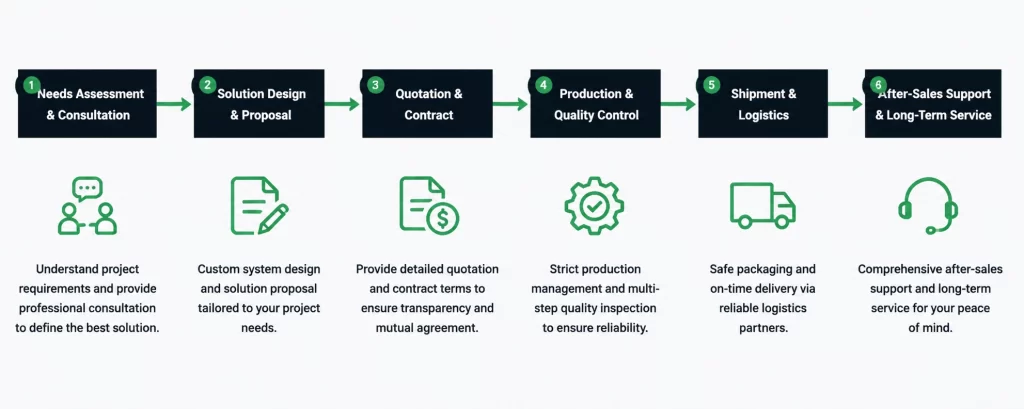
A well-managed supply chain and procurement strategy helps installers, distributors, and developers secure reliable products, reduce operational risks, and build long-term solar business growth.
Commercial Solar Solutions: Project Planning & Component Selection
Commercial and industrial (C&I) solar projects require detailed engineering planning and strategic component selection to ensure reliable performance, regulatory compliance, and long-term returns.
A professional solar partner should support site assessment, structural evaluation, electrical system integration, and grid interconnection planning while helping businesses select the right solar components based on project requirements.
Key Considerations Include:
- Site Assessment & System Design: Evaluate rooftop conditions, load capacity, shading risks, and electrical infrastructure through site surveys, drone inspections, and 3D modeling. Proper POI evaluation ensures compatibility with local utility requirements.
- Solar Modules: Select high-efficiency N-type TOPCon, HJT, and bifacial modules to improve energy yield, reduce degradation, and enhance long-term project performance.
- Inverter Selection: Multi-MPPT string inverters are widely used in C&I rooftop projects for higher system availability and easier O&M, while central inverters are typically suited for large-scale ground-mounted systems.
- BOS & Mounting Solutions: Choose site-specific racking, tracking, and protection systems, including terrain-adaptive trackers for ground projects and lightweight mounting solutions for commercial rooftops.
- Permitting & Compliance: Early planning for certifications and grid approvals, such as UL/CEC in the U.S. and CE/TÜV in Europe, helps prevent installation delays and accelerates commissioning.
Proper engineering planning and component selection enable installers and developers to maximize system performance, reduce risks, and achieve better project economics.
High-Value Services Offered by Tier-1 B2B Distributors
Modern wholesale solar partners provide value far beyond logistics and warehousing. Leading distributors act as an extension of installers' engineering, procurement, and project management teams, helping businesses improve efficiency and reduce operational risks.
Value-Add Distributor Capabilities
Co-Engineering & Design Support:
Professional distributors provide technical support through tools such as HelioScope, PVsyst, and AutoCAD drafting, helping optimize system design, improve accuracy, and accelerate project development.
Flexible Financing Solutions:
Commercial solar projects often require significant upfront investment. Reliable partners may offer flexible payment terms, credit solutions, and financing support to improve cash flow management.
Just-In-Time (JIT) Jobsite Delivery:
Coordinated delivery schedules help reduce storage challenges, minimize project delays, and ensure modules, inverters, and other components arrive according to installation timelines.
Technical Support & After-Sales Service:
Tier-1 distributors provide product training, troubleshooting support, warranty assistance, and ongoing technical guidance to help installers complete projects smoothly and maintain customer satisfaction.
How to Choose the Right B2B Solar Partner
Selecting a reliable B2B solar partner requires evaluating more than product pricing. Companies should consider technology capabilities, manufacturing strength, supply chain reliability, technical support, and long-term cooperation potential.
Choosing reliable B2B solar suppliers helps installers and developers secure high-quality products, professional technical support, and stable long-term cooperation for successful solar project execution.
| Evaluation Criteria | Key Requirements |
|---|---|
| Product & Technology | High-efficiency N-type TOPCon, HJT, bifacial modules, hybrid inverters, and scalable BESS solutions |
| Manufacturing Quality | Automated production, strict quality control, IEC/TÜV/UL/CE certifications, and long-term warranties |
| Inventory & Logistics | Regional warehouses, flexible shipping options, job-site delivery, and reliable supply planning |
| Technical Support | System design, energy analysis, engineering guidance, installation support, and troubleshooting |
| Supply Chain Transparency | Traceable sourcing, compliance documentation, and risk management capabilities |
| After-Sales Service | Warranty support, product training, and long-term technical assistance |
Choosing an experienced solar supplier like Sunpal can provide key business advantages, including stable product supply, advanced solar technologies, professional engineering support, flexible OEM/ODM solutions, and global logistics capabilities. A reliable partner helps installers and developers reduce procurement risks, improve project efficiency, and create long-term growth opportunities in the renewable energy market.
Optimizing Commercial Project Economics
Wholesale solar partners directly impact project LCOE, IRR, and bankability by improving procurement strategies, system design, and financing options.
Key approaches include:
- BOS Cost Optimization: Standardized designs and pre-assembled mounting solutions reduce material usage, labor costs, and installation time.
- Strategic Procurement: Volume-based purchasing agreements and forward supply planning help secure better pricing and stable component availability.
- Flexible Financing Support: Solutions such as L/C, deferred payment terms, and project financing partnerships improve cash flow for large-scale projects.
- BESS Integration: Scalable energy storage systems enable peak shaving, demand-charge management, and additional value for C&I customers.
A reliable wholesale partner helps businesses reduce total project costs, improve investment returns, and accelerate commercial solar deployment.
Solar Plus Storage Solutions for Commercial Applications
Commercial customers are increasingly integrating solar generation with battery storage to improve energy independence, reduce electricity costs, and optimize energy management.
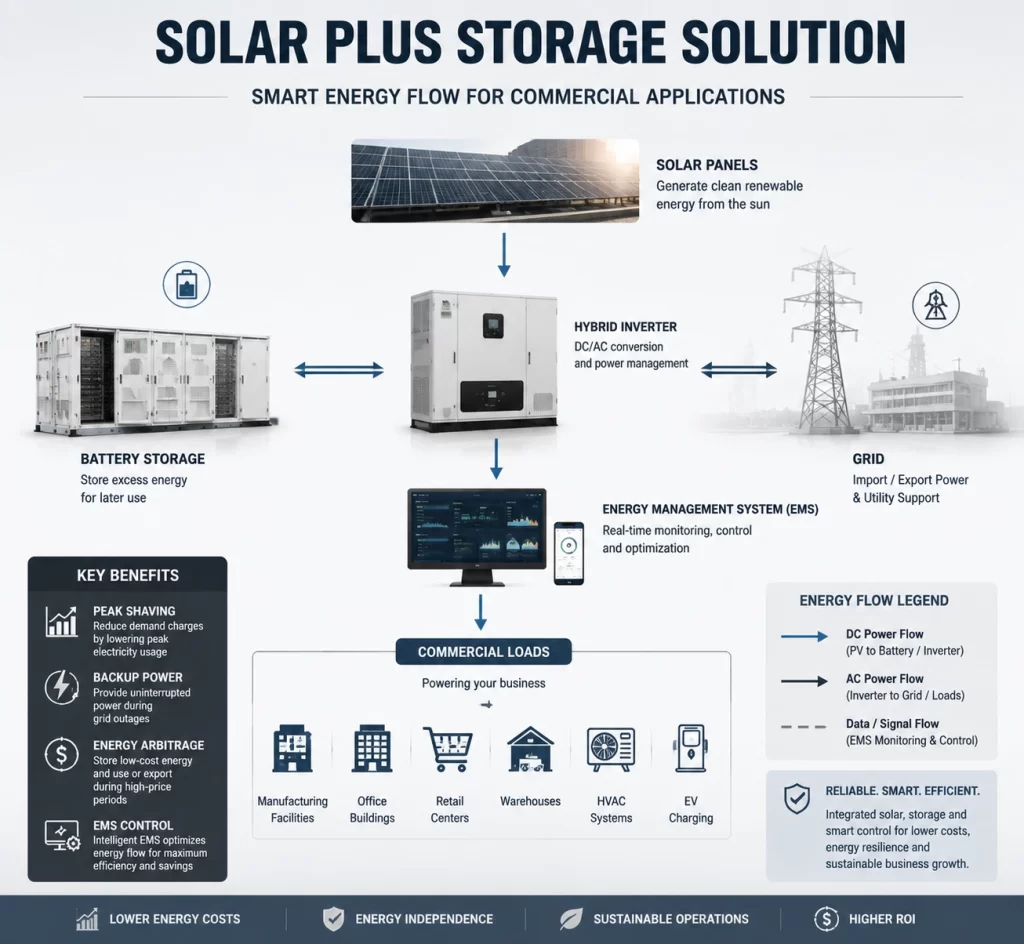
Key benefits include:
- Peak Shaving: Reduce demand charges by managing energy consumption during peak periods.
- Backup Power: Maintain critical operations during grid outages.
- Energy Optimization: Store excess solar generation and improve renewable energy utilization.
- Smart Energy Management: Hybrid inverters and EMS platforms enable intelligent charging and discharging control.
Solar-plus-storage solutions are becoming an essential part of modern C&I projects, providing greater flexibility, resilience, and long-term value.
Conclusion: Turning Solar Opportunities into Business Growth
In today's competitive renewable energy market, successful solar projects require careful planning, efficient execution, and the right strategic partnerships. Sunpal supports global partners throughout the entire solar project development process, from product selection and engineering planning to final project deployment. By combining advanced solar technologies, reliable supply capabilities, and professional project support, Sunpal helps installers, distributors, and developers achieve efficient project delivery and long-term business growth.